
Carl’s Difficult Course
Hans Brinker, or The Silver SkatesThis flow traces Carl Schummel’s movement from class hostility and bravado toward partial self-knowledge and a constrained adult life.
increasing Bearing strength in each event
 decreasing
Bearing strength in each eventdecreasingMockery of the Poor
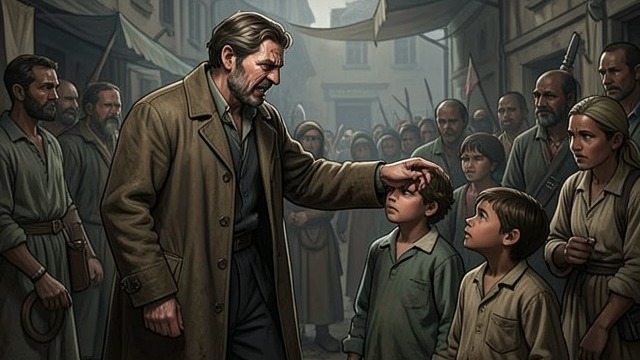
Mockery of the Poor
Social contempt
Carl Schummel ridicules Hans Brinker and Gretel Brinker for their poverty and tries to exclude them from the skating race. His behavior reflects an assumption that status should decide who belongs.
Opposition encountered
Peter van Holp challenges Carl’s claim that the poor should be kept out. Carl backs away from a direct fight but continues to look for opportunities to assert himself.
The Robber’s Night
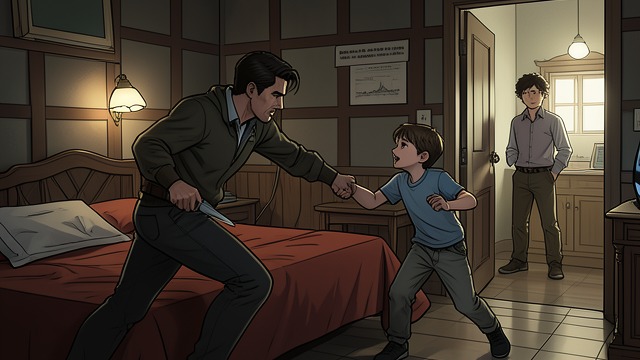
The Robber’s Night
Bravado tested
A robber enters the boys’ room with a knife, and Peter captures him. Carl is absent during the struggle and returns with the landlord’s party after going to raise the alarm.
Private embarrassment
The other boys understand what happened, though they spare him open humiliation. Alone afterward, Carl recognizes that his public persona is less impressive than he pretends.
A Hand Accepted
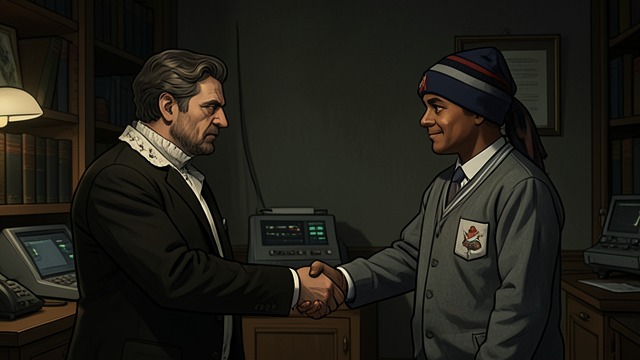
A Hand Accepted
Peter’s generosity
Peter argues that the captured robber deserves justice without cruelty, then offers Carl his hand despite their disagreements. Carl returns the gesture and admits they agree more than he had implied.
A limited change
The exchange does not erase Carl’s habits, but it shows that he can respond to fairness. His relationship with the group becomes less openly hostile.
Defeat at the Race
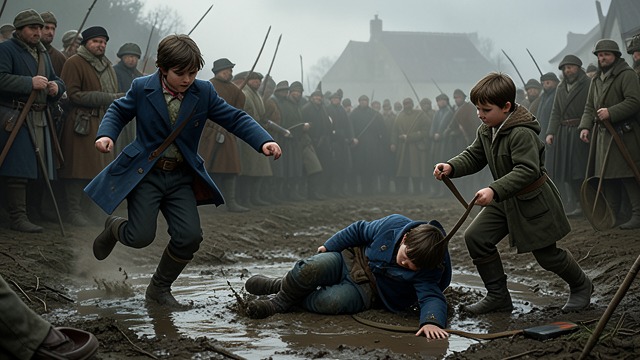
Defeat at the Race
Competitive success and failure
Carl wins an early boys’ mile but later falls, losing his chance at the decisive outcome. His speed is real, yet the race exposes how little skill alone can control.
A social contrast
Hans gives Peter his strap instead of pursuing his own chance. Carl’s competitive focus stands against the generosity that earns the lasting admiration of the crowd.
An Uneasy Adulthood
An Uneasy Adulthood
Fortune turns
Carl’s father suffers business reverses, and Carl’s lack of close friends and firm principles leaves him vulnerable. He becomes a bookkeeper rather than a prominent figure.
Courtesy learned late
Voostenwalbert Schimmelpenninck treats him kindly, and Carl responds respectfully. His later life suggests some capacity for change, though not a complete transformation.
Before the race, on the canal
The first evening in Leiden
The morning after the robbery
December 20, during the boys’ race
Years after the race
